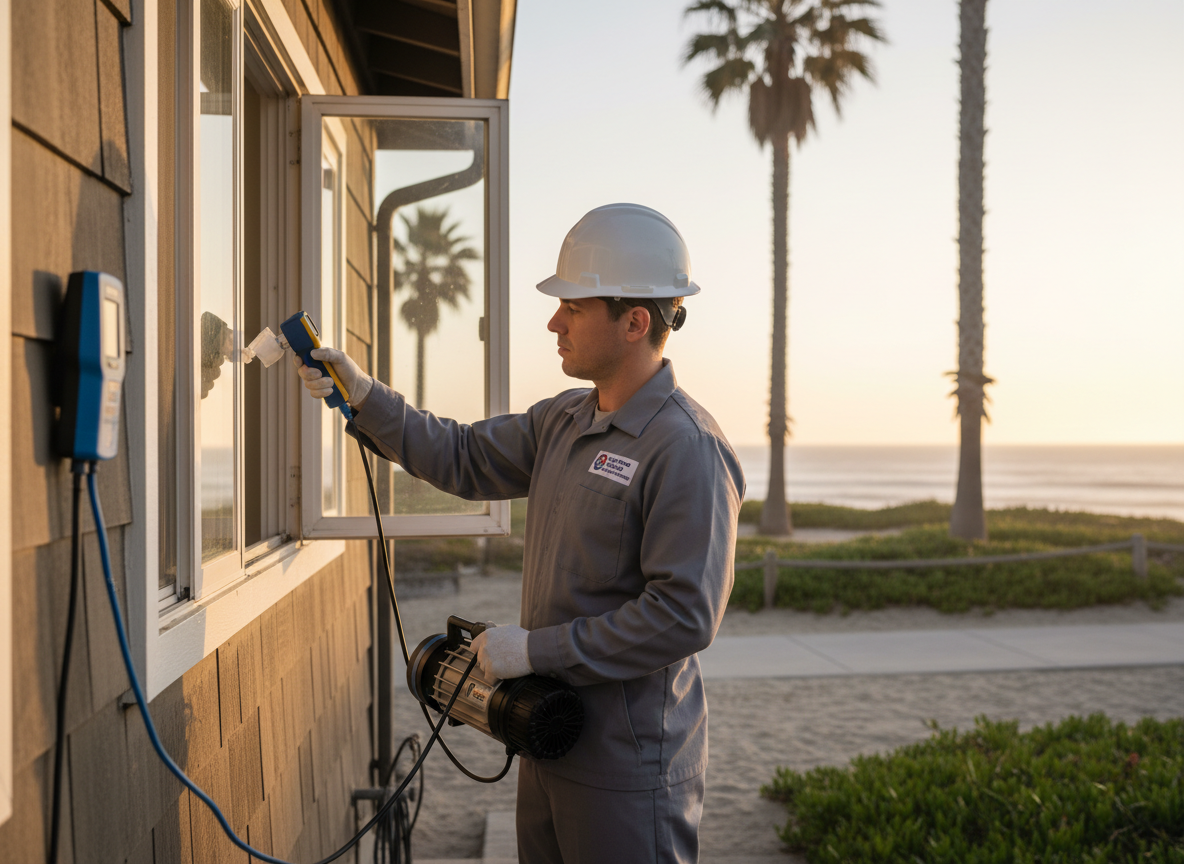
Sunset Beach homes built close to the Pacific often feature older wood framing and crawl spaces that trap moisture from cool summer fog and salt air. Air quality and mold testing here starts with targeted sampling in attics, under-floor areas, and HVAC returns where humidity lingers even when outdoor temperatures stay mild. Technicians use calibrated pumps and spore traps to measure both viable and non-viable particles, then compare results against Orange County background levels rather than generic national charts.
Testing protocols account for the area's sandy soil and high water table, which can push groundwater vapor into slab-on-grade homes along Pacific Coast Highway. Samples are collected at multiple heights and locations to map concentration gradients, revealing whether mold originates from roof leaks common in older beach cottages or from condensation on uninsulated ductwork. Reports include chain-of-custody documentation and clear remediation thresholds accepted by local property managers.
Homeowners in Seal Beach and Huntington Beach frequently request pre-purchase testing before escrow closes on 1950s–1970s properties. The process identifies hidden growth behind bathroom tile or in laundry rooms without invasive demolition, helping buyers understand actual conditions before negotiations. Follow-up clearance testing after any cleanup confirms spore counts have returned to ambient levels typical for the coastal zone.
Technician insight
In Sunset Beach the thing that catches most people out with air quality and mold testing is the cool summer marine layer that keeps relative humidity high inside older single-wall homes even when the sun is out. That steady moisture hides in enclosed patios and under the 1960s-era floorboards along Pacific Coast Hwy, so a single indoor reading often misses the gradient that only shows up when you sample at different elevations.
Pre-sale testing on a 1962 beach cottage
Buyers requested air quality testing before closing on a home two blocks from the sand. Elevated aspergillus levels appeared in the laundry room and adjacent crawl space. Additional samples confirmed the source was condensation from an uninsulated duct running through the damp sand-soil interface. The report allowed the seller to address the duct insulation before escrow closed, clearing the air readings to match outdoor controls.
How it works
- 1
Initial Site Assessment
Walk the property to note construction type, recent water events, and ventilation patterns specific to Sunset Beach lots.
- 2
Sampling Plan
Place air and surface samples in high-risk zones such as crawl spaces and HVAC systems while recording outdoor control samples.
- 3
Laboratory Analysis
Submit samples to an accredited lab for spore identification and concentration counts within 24–48 hours.
- 4
Report and Recommendations
Deliver a written report with findings mapped to the home layout and next-step guidance based on local building practices.
Pricing
Cost depends on square footage, number of samples, and whether rush lab turnaround is needed; quotes provided after site details are reviewed.