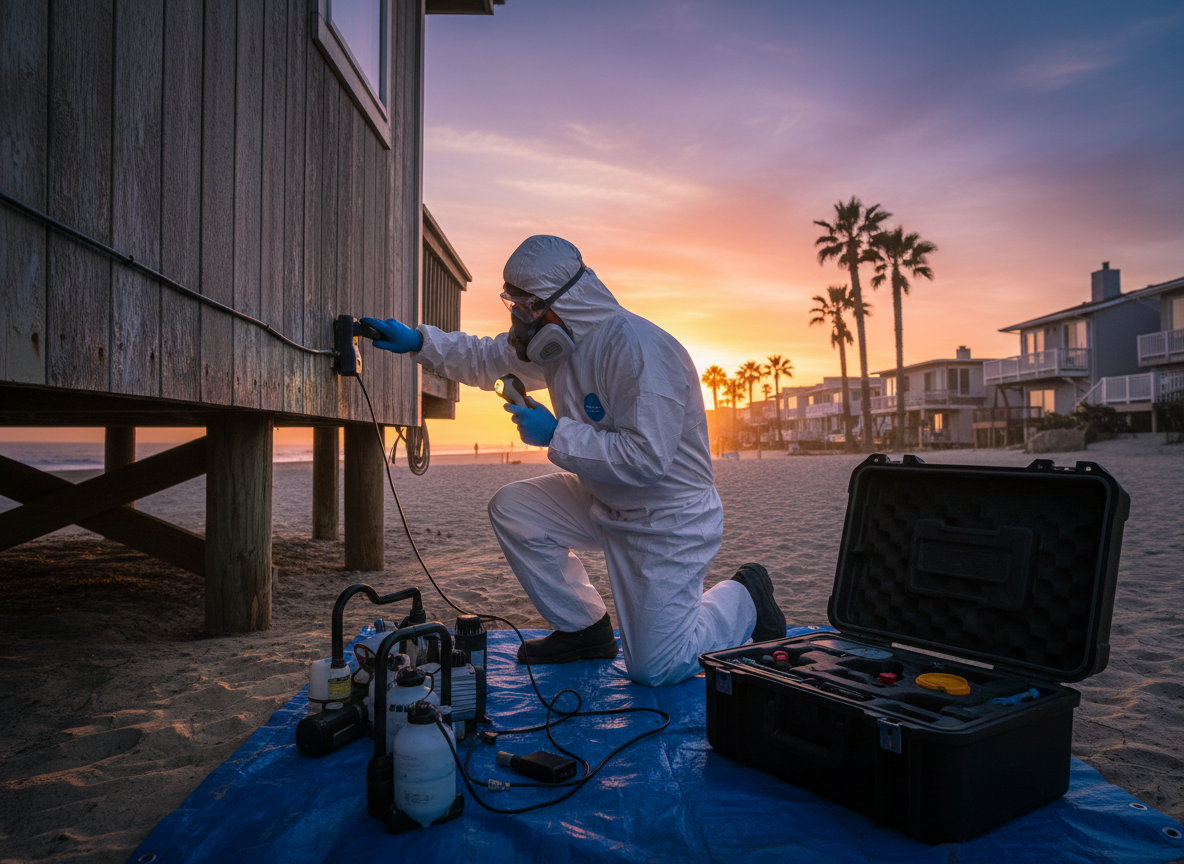
In Sunset Beach the mild coastal Mediterranean climate keeps summers cool but allows ocean moisture to linger in attics, crawl spaces and wall cavities of older beach homes. A certified mold inspector checks for hidden growth behind stucco or in raised foundations common along Pacific Coast Highway, where salt air accelerates condensation on cooler surfaces. Inspections include moisture mapping with meters and thermal imaging to locate problem zones without invasive demolition, giving homeowners clear documentation of conditions before any remediation decisions.
Local properties in Sunset Beach and nearby Seal Beach often feature 1950s-1970s construction with limited ventilation and original plumbing that can leak slowly under slabs. An inspector evaluates these systems for hidden water intrusion from winter storms or irrigation overspray, noting how the flat terrain near the beach allows water to pool against foundations. Air and surface sampling follows industry protocols to identify species and concentrations, helping differentiate normal outdoor spores from indoor amplification caused by the area's consistent humidity.
Inspectors also review building code compliance for ventilation and vapor barriers in Orange County coastal zones, flagging areas where prior renovations may have trapped moisture. Homeowners receive a written report with photos, lab results and prioritized recommendations that account for the realities of working near active waterways and dunes. This approach prevents unnecessary work while addressing actual risks in homes that sit close to the tideline.
Inspection Preparation Tips
Clear access to attics, crawl spaces and any known water stains before the visit. Note recent roof leaks, appliance issues or musty odors to guide the inspector toward likely sources.
Technician insight
In Sunset Beach the thing that catches most people out with certified mold inspector is how the constant marine layer keeps crawl spaces damp year-round even when indoor humidity feels fine; older raised homes along the highway often have hidden growth under floorboards that only shows up once you pull insulation.
Crawl Space Discovery in a 1960s Bungalow
Homeowner noticed a faint musty smell after heavy winter rain. Inspection revealed elevated moisture in the crawl space under the living room where the original vapor barrier had torn. Samples confirmed Penicillium growth tied to poor drainage from the adjacent alley. We documented the conditions, provided the report and advised targeted drying before any further work.
How it works
- 1
Initial Consultation
Discuss property history, visible concerns and access points over the phone or at 16812 Pacific Coast Hwy.
- 2
On-Site Assessment
Perform visual inspection, moisture readings and targeted sampling throughout the structure.
- 3
Laboratory Analysis
Send collected samples for identification and concentration reporting.
- 4
Detailed Report Delivery
Provide written findings with photos, results and next-step guidance within 48 hours.
Pricing
Pricing based on square footage, number of samples and property access complexity; upfront quotes provided after initial consultation.