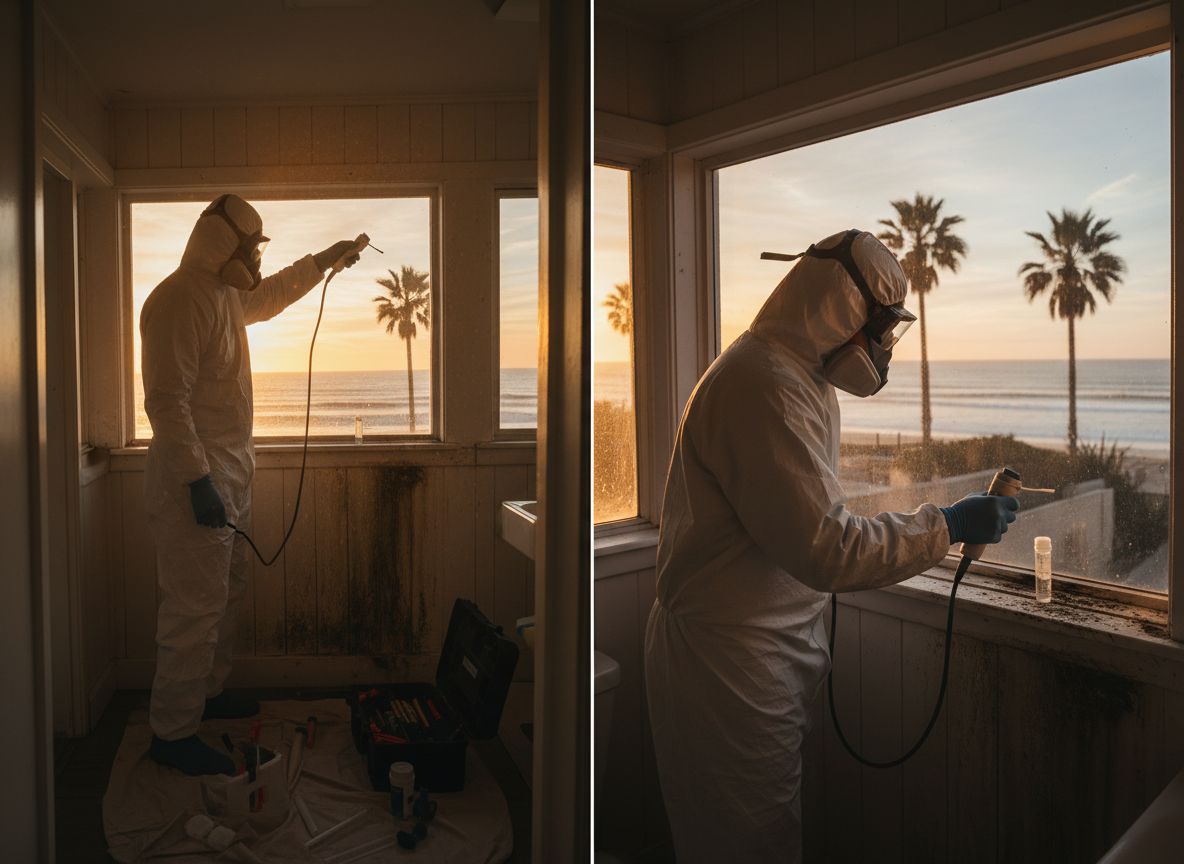
Mold testing in Sunset Beach requires attention to the mild coastal Mediterranean climate where cool summers and frequent marine layer fog keep indoor humidity elevated even when outdoor temperatures stay moderate. Homes here often feature older wood-frame construction with crawl spaces and attics that trap moisture from sea breezes, allowing hidden growth behind drywall or under flooring that standard visual checks miss. We collect air samples from multiple rooms plus surface swabs from suspected areas, then send them to an independent lab for species identification because black mold and other toxic varieties behave differently in salty environments near Seal Beach and Huntington Beach.
Testing protocols account for the age of many properties in Sunset Beach, where pre-1980 builds commonly have original plumbing and roof penetrations that leak slowly over years. Salt corrosion accelerates deterioration of metal flashing and vents, creating micro-cracks that allow water intrusion during winter storms. Our process includes moisture mapping with meters and thermal imaging to locate these entry points before recommending remediation steps that comply with Orange County health guidelines.
Homeowners in the area frequently request testing after noticing musty odors following periods of high humidity or after nearby construction disturbs soil and increases airborne spores. We document findings with photos and chain-of-custody forms so results hold up if insurance or real estate transactions are involved.
Seasonal Moisture Patterns
Fog and on-shore winds in late spring and early summer often raise indoor relative humidity above 60 percent in Sunset Beach homes without adequate ventilation, creating conditions where dormant spores activate quickly in bathrooms and laundry rooms.
Testing vs Remediation
Mold testing identifies the type and extent of growth but does not remove it; results guide whether containment and professional cleanup are required under local building codes.
Technician insight
In Sunset Beach, the thing that catches most people out with Mold Testing is how salt-laden air from the ocean speeds up corrosion on roof vents and window frames in homes built before the 1990s, creating slow leaks that only show up when you pull back insulation in the crawl space during testing.
Fog-Related Odor in 1960s Beach Cottage
A homeowner near the Sunset Beach pier reported a persistent musty smell after several weeks of marine layer fog. We found elevated moisture behind the bathroom vanity and in the attic insulation. Air samples confirmed Penicillium and Aspergillus growth. Targeted testing mapped the affected zones so remediation could focus on the leak source without unnecessary demolition.
How it works
- 1
Initial Consultation
Discuss symptoms and property history over the phone or on-site at your Sunset Beach address.
- 2
Visual Inspection
Examine attics, crawl spaces, and exterior walls for water stains and musty areas common in coastal Orange County homes.
- 3
Sample Collection
Take air, surface, and bulk samples from multiple zones, including areas near the Pacific Coast Highway.
- 4
Lab Analysis
Send samples to an accredited laboratory for mold type identification and concentration levels.
- 5
Report Delivery
Provide written findings with photos and recommendations within 48 hours.
Pricing
Pricing varies by home size and number of samples required; most Sunset Beach single-family tests fall in a mid-range bracket depending on access to attics and crawl spaces.