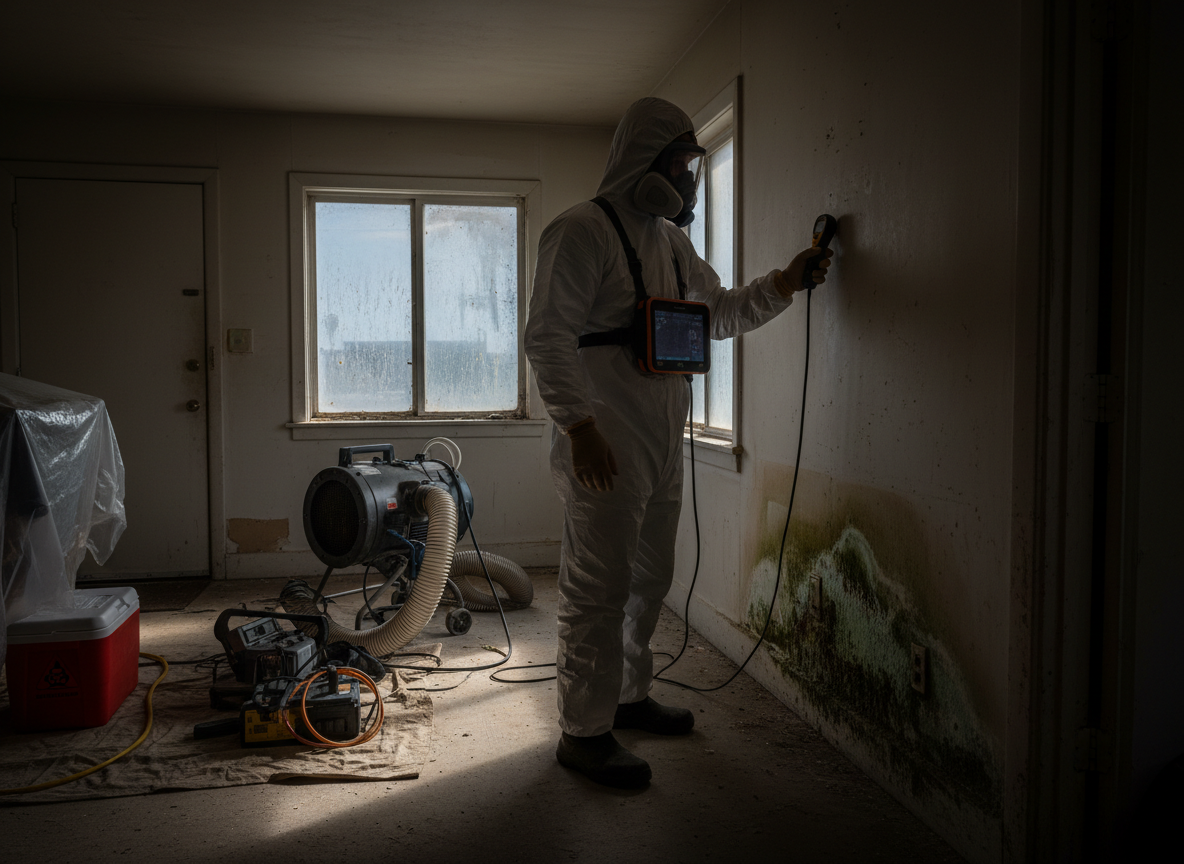
Black mold inspection in Sunset Beach starts with understanding how the area's mild coastal Mediterranean climate keeps humidity elevated even in cool summers. Morning marine layers and salt air accelerate moisture intrusion through stucco cracks, roof vents, and older window frames common in the neighborhood's beach cottages built decades ago. Inspectors map hidden moisture behind walls and under flooring where ocean breezes push damp air into crawl spaces and attics, conditions that differ from inland Orange County properties.
Technicians check for condensation on plumbing lines and HVAC ducts that run through unconditioned spaces in these single-story homes near the water. Air sampling and surface testing target areas where poor ventilation meets constant low-level moisture from the nearby Pacific, conditions that allow Stachybotrys to take hold on drywall or wood framing after minor leaks. Reports note any code-related ventilation shortfalls typical in pre-1980s Sunset Beach construction without suggesting fixes beyond inspection scope.
Edge cases include mold growth inside wall cavities after storm-driven rain enters through compromised siding, or under kitchen cabinets where dishwasher leaks combine with coastal humidity. Inspections avoid disturbing materials until sampling confirms presence, preventing unnecessary spore release in tightly built beach homes. Findings guide next steps for remediation while respecting the compact lots and shared walls found along Pacific Coast Highway.
Local Moisture Patterns Affecting Inspections
Morning fog and cool summer temperatures keep relative humidity higher than inland spots, so inspectors pay extra attention to north-facing walls and shaded patios where drying is slowest in Sunset Beach homes.
Technician insight
In Sunset Beach, the thing that catches most people out with black mold inspection is how the constant marine layer keeps wood framing damp under the house even when indoor air feels dry. Older homes along Pacific Coast Highway often have crawl spaces that never fully dry because of the cool summers and salt air, so we always pull back a few vents to check before assuming the issue is just a bathroom leak.
Hidden Growth Behind Kitchen Cabinets
A homeowner in Sunset Beach noticed a musty smell after a dishwasher leak. We found elevated moisture in the wall cavity where ocean air had prevented drying for weeks. Sampling confirmed black mold on the back of the drywall. We documented the extent and advised targeted removal without disturbing the rest of the kitchen.
How it works
- 1
Initial Walkthrough
Technician examines all accessible areas of the Sunset Beach property for visible staining and musty odors while noting construction details typical of local beach homes.
- 2
Moisture Mapping
Non-invasive meters check walls, floors, and ceilings for hidden dampness caused by ocean air infiltration and common roof or window leaks in the area.
- 3
Air and Surface Sampling
Samples are collected from living spaces and suspected cavities, then sent for lab analysis to identify black mold types linked to coastal humidity.
- 4
Findings Review
Detailed report outlines locations, extent, and contributing factors such as ventilation gaps in older Sunset Beach construction, delivered same day when possible.
Pricing
Inspection cost depends on square footage, number of samples, and access challenges in older coastal homes.