Sunset Beach sits right on the sand in Orange County with homes built from the 1940s onward that often have below-grade spaces exposed to salt air and occasional high tides. These conditions let moisture creep through concrete walls and slab edges even when the weather stays mild year-round. A proper inspection starts by mapping every cold joint and utility penetration where ocean humidity condenses overnight.
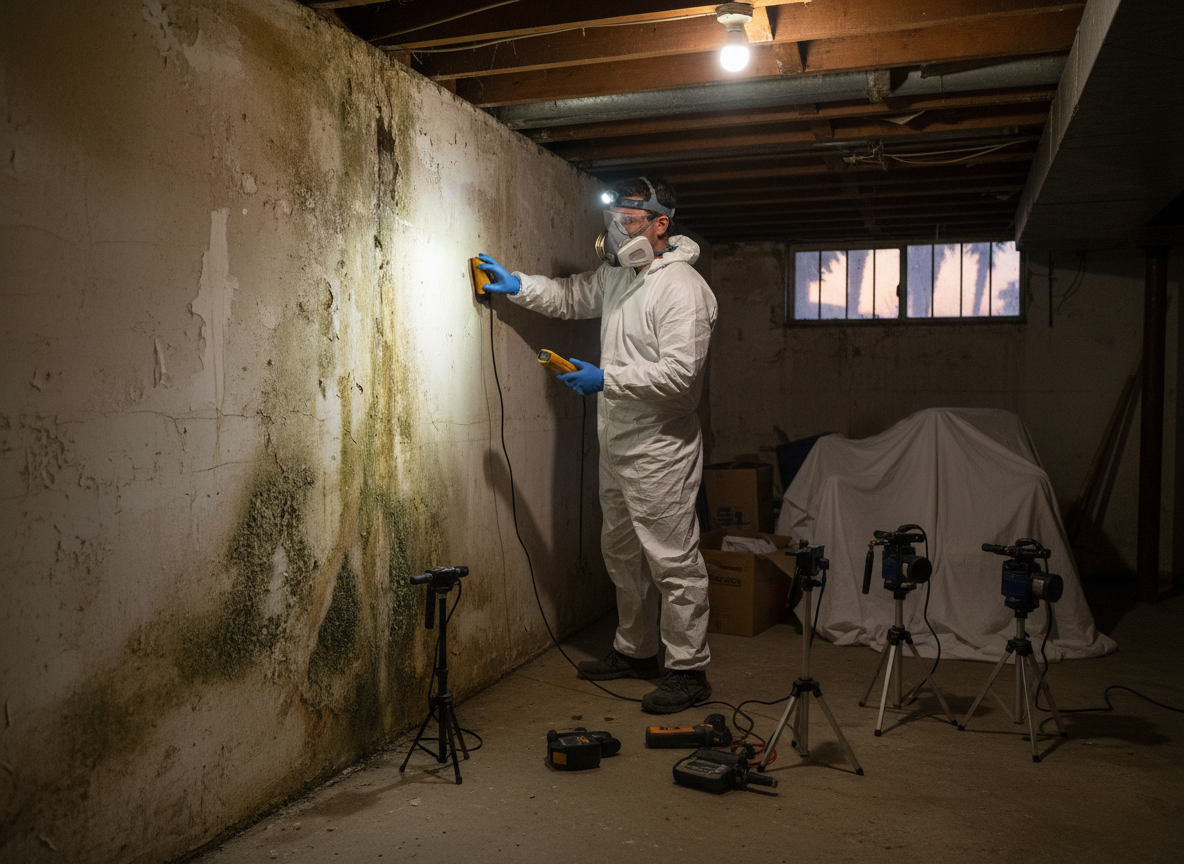
Many properties between Sunset Beach and Seal Beach have finished basements added decades later without proper vapor barriers. We use moisture meters and infrared scans to find hidden damp spots behind drywall or under carpet that standard visual checks miss. Older Huntington Beach-adjacent homes can also show mold growth along the footer where irrigation from neighboring yards meets the natural water table.
Edge cases include post-storm flooding that pushes seawater under slab foundations and leaves salts that keep surfaces damp long after the water recedes. We document every reading with photos and notes so homeowners can see exactly which materials need removal versus simple drying. This level of detail prevents callbacks when the next cool marine layer rolls in.
Technician insight
In Sunset Beach the thing that catches most people out with basement mold inspection is how the cool marine layer every night drives condensation along the north-facing walls even when the rest of the house feels dry. Older homes between here and Seal Beach often have original concrete that never got a proper vapor barrier, so the moisture travels right up the footer and hides behind finished surfaces.
Hidden Moisture Behind Finished Wall
A homeowner in Sunset Beach noticed a musty smell after a heavy coastal fog period. We found elevated moisture along the north basement wall where the slab met the original 1950s concrete. Infrared imaging showed a cold strip running the full length of the room. We opened a small section, confirmed active growth, and provided a targeted remediation plan that kept the rest of the finished space intact.
How it works
- 1
Initial Walkthrough
We meet at the property and review any visible water stains or musty odors while noting the age of the home and recent weather exposure.
- 2
Moisture Mapping
Using meters and thermal imaging we scan walls, floors, and ceilings to locate active moisture sources tied to coastal humidity or drainage issues.
- 3
Air and Surface Sampling
Samples are collected from multiple basement zones and sent to a lab to identify mold types common in Orange County beach communities.
- 4
Written Report and Recommendations
Findings are compiled into a clear report with photos, moisture readings, and next-step options for remediation if needed.
Pricing
Pricing depends on basement size, access difficulty, and number of samples required; call for a direct quote.