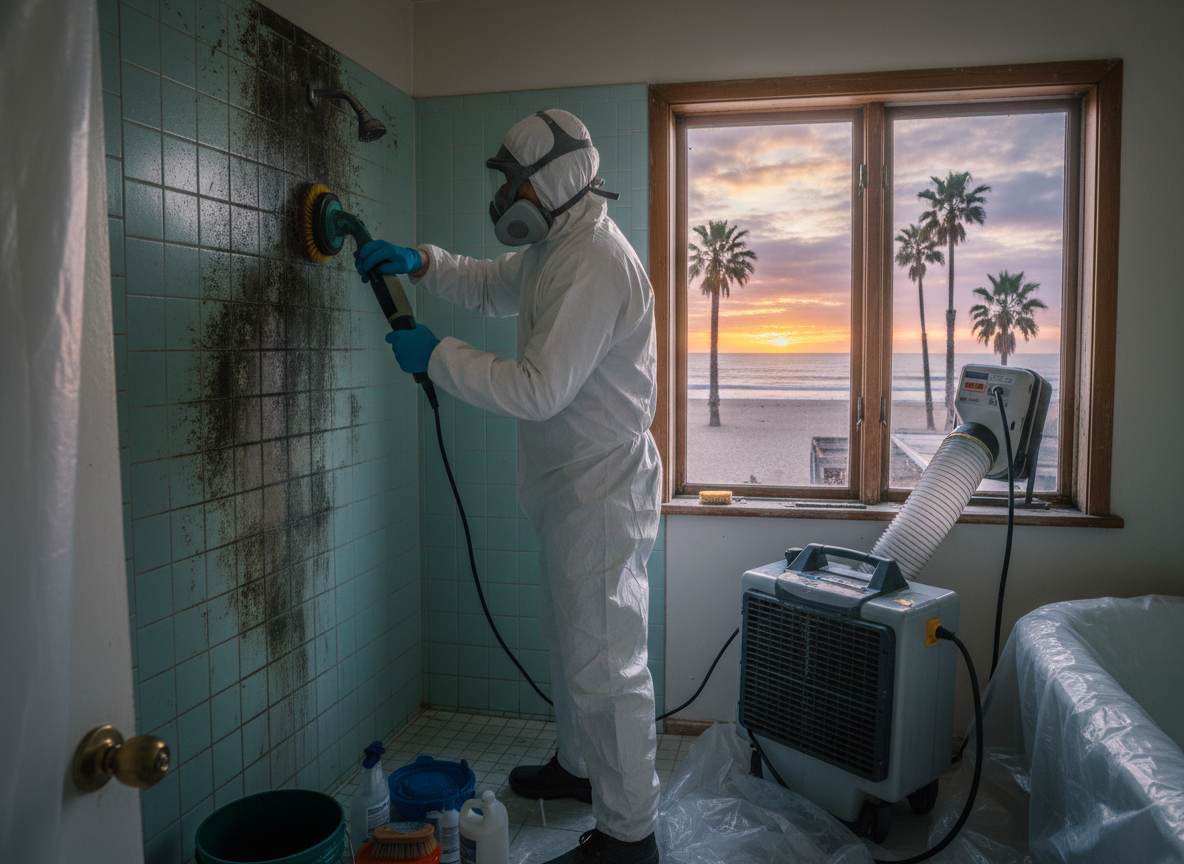
Sunset Beach bathrooms in homes built along Pacific Coast Highway often trap moisture because the mild Mediterranean climate keeps air temperatures moderate year-round while the nearby Pacific supplies steady humidity. This combination allows mold to form on grout lines, behind vanities, and in poorly vented shower ceilings even when residents run exhaust fans. Technicians start by mapping every moisture source including window condensation that runs down stucco walls and leaks from aging shower pans common in 1960s and 1970s tract homes.
Removal work here requires care with original tile and plaster finishes that can crumble when saturated. Containment barriers are sealed to doorways to keep spores from drifting into adjacent bedrooms that share thin interior walls typical of beach bungalows. HEPA air scrubbers run continuously because the cool summer evenings slow drying, and any remaining dampness can restart growth within days. Technicians also check crawl spaces beneath raised floors where salt air accelerates pipe corrosion that feeds hidden leaks.
After physical removal, surfaces receive antimicrobial treatment formulated for high-humidity coastal environments. Final clearance testing confirms spore counts match outdoor levels before barriers come down. Homeowners receive written guidance on adjusting bathroom ventilation schedules to match the local pattern of morning marine layers that raise indoor humidity for hours after sunrise.
Technician insight
In Sunset Beach, the thing that catches most people out with bathroom mold removal service is how the constant salt-laden marine layer keeps framing lumber damp behind shower walls long after the visible surface feels dry, especially in the older single-wall stucco homes along Pacific Coast Hwy.
Hidden growth behind original tile
A homeowner in a 1968 Sunset Beach cottage noticed discoloration along the tub edge after a week of marine fog. Inspection revealed water had wicked into the wall cavity through cracked grout and reached the exterior stucco. The team removed the lower three feet of drywall, treated the studs, and reinstalled moisture-resistant board with new tile. Follow-up readings stayed dry through the next cool-summer marine layer.
How it works
- 1
On-Site Inspection
Technician uses moisture meters and borescopes to locate all affected areas behind tile, under cabinets, and in ceiling cavities common in Sunset Beach homes.
- 2
Containment Setup
Plastic barriers and negative air machines isolate the bathroom so spores do not spread into living spaces or neighboring units in multi-family buildings near the beach.
- 3
Removal and Cleaning
Porous materials are removed, non-porous surfaces are scrubbed with appropriate agents, and HEPA vacuuming captures remaining particles.
- 4
Drying and Verification
Dehumidifiers and air movers run until readings reach safe levels, followed by post-remediation air sampling before the space is returned to use.
Pricing
Cost depends on square footage affected, depth of hidden growth behind fixtures, and whether subfloor or drywall replacement is required; 24/7 dispatch available from our Pacific Coast Highway location.