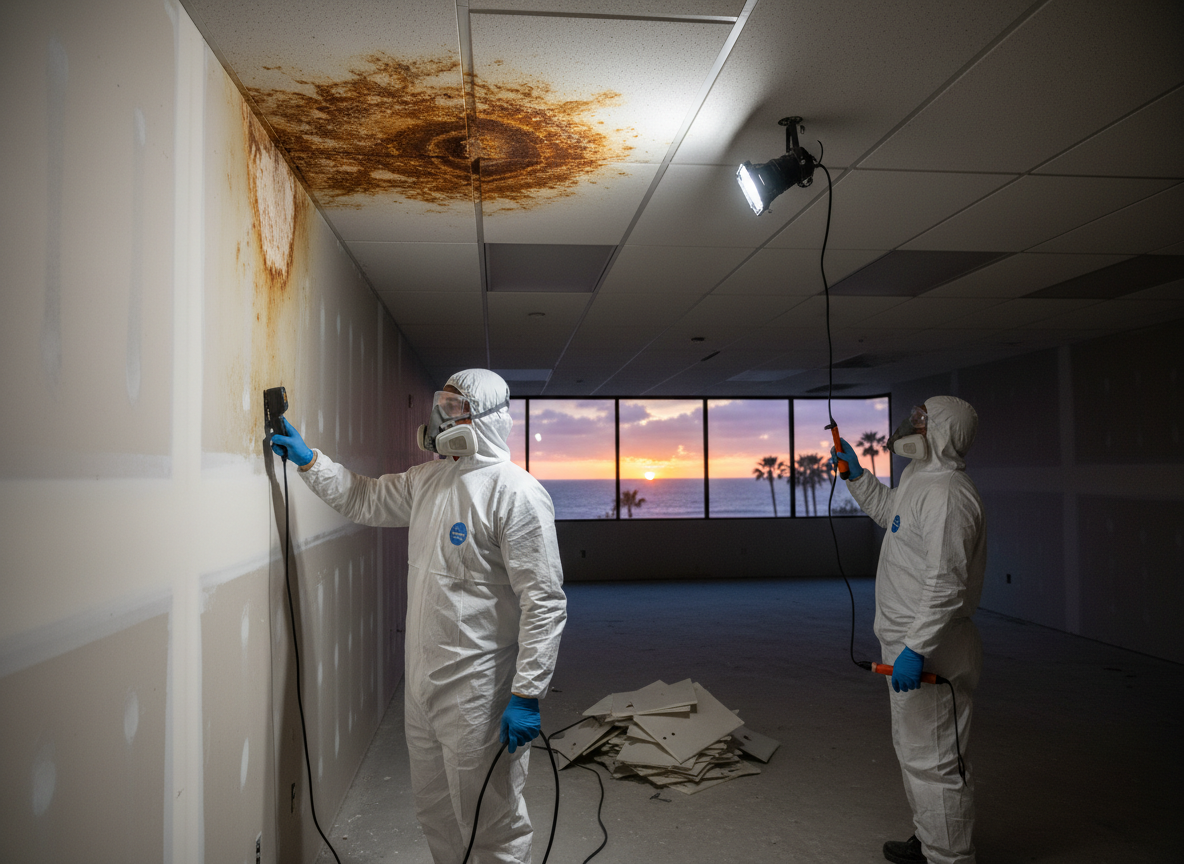
Commercial properties along Pacific Coast Highway in Sunset Beach face persistent moisture challenges from the mild Mediterranean climate and onshore breezes that push salt air into building envelopes. Older retail and light industrial structures common in this stretch of Orange County often have flat roofs and stucco exteriors that trap condensation, especially where HVAC systems run continuously. An inspection must include crawl spaces, suspended ceilings, and mechanical rooms where humidity from nearby Seal Beach and Huntington Beach can accelerate hidden growth behind walls or in ductwork.
Inspectors check for moisture intrusion at slab edges and around loading docks, areas frequently overlooked in standard assessments. Commercial code requirements in Orange County emphasize documentation of affected square footage and air quality sampling when tenants report respiratory complaints. Edge cases include mold in fire-rated assemblies or near electrical panels, where remediation sequencing must coordinate with licensed trades to avoid code violations during any follow-up work.
Seasonal cool summers reduce visible surface drying, so inspectors rely on moisture meters and thermal imaging to locate active colonies that would otherwise remain undetected. Properties converted from residential to commercial use along the beach often retain outdated plumbing that leaks into shared walls, creating recurring issues between adjacent suites.
Technician insight
In Sunset Beach the thing that catches most people out with Commercial mold inspection is how the constant sea air and occasional winter storms push moisture under older stucco parapets on buildings along Pacific Coast Highway, creating hidden growth in tenant demising walls that only shows up on thermal scans.
Retail Strip Inspection
A clothing store in a Sunset Beach strip center reported persistent musty smells after a roof leak. Inspection revealed mold on ceiling tiles and inside the shared HVAC trunk line fed from the attic. We mapped moisture across three suites and documented the path of intrusion from the parapet wall. The owner received a clear report that allowed targeted remediation without full tenant displacement.
How it works
- 1
Site Walkthrough
Review building plans and interview facility staff about past water events or odor complaints.
- 2
Moisture Mapping
Use meters and infrared cameras to scan walls, ceilings, and HVAC components throughout the commercial space.
- 3
Sampling and Documentation
Collect air and surface samples from suspect areas and record findings with photos and diagrams.
- 4
Report Delivery
Provide a written summary with locations, severity ratings, and recommended next steps for the property owner.
Pricing
Pricing varies by building size, number of stories, and extent of HVAC access required; contact for a property-specific assessment.