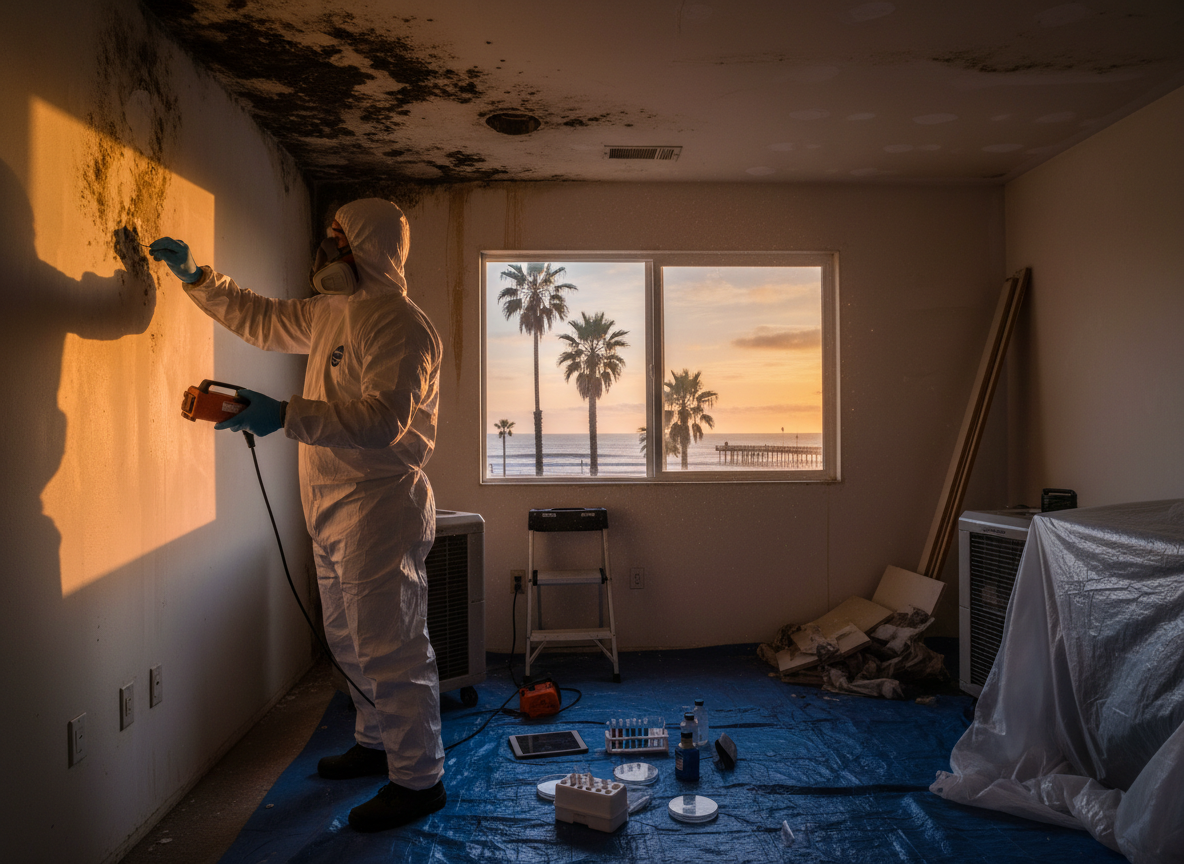
Sunset Beach homes, many built decades ago with wood framing close to the sand, face constant moisture from the Pacific and the mild Mediterranean climate that keeps summers cool but humidity elevated year-round. Emergency mold testing here often starts with air and surface sampling in crawl spaces, attics, and wall cavities where salt air accelerates hidden growth. Technicians from 16812 Pacific Coast Hwy respond immediately because even small leaks from coastal storms or irrigation can spread spores quickly through older single-wall construction common in the neighborhood.
Testing protocols account for the area's proximity to Seal Beach and Huntington Beach, where shared water tables and occasional king tides push groundwater higher. Samples are collected using calibrated pumps and tape lifts, then sent to independent labs while crews contain the area to prevent cross-contamination. Homeowners in these blocks frequently discover issues only after musty odors appear following cool, damp nights that trap moisture inside poorly vented beach cottages.
Edge cases include testing behind stucco repairs or in rental units where previous owners covered over water damage from roof leaks. The service emphasizes non-destructive methods first, then targeted boroscope inspection when readings indicate hidden colonies. This approach prevents unnecessary demolition while meeting Orange County expectations for documentation before any remediation begins.
Seasonal patterns matter: winter rains combined with ocean fog create prolonged damp periods that differ from inland Orange County conditions. Emergency calls spike after storms when residents notice discoloration on baseboards or in garages. Proper testing identifies species and concentration levels so decisions about containment and follow-up can be made with data rather than guesswork.
Technician insight
In Sunset Beach, the thing that catches most people out with emergency mold testing services is how the constant ocean breeze and older beach cottages let moisture travel through single-wall construction even when no obvious leak shows up on the interior.
Hidden Growth After Winter Rain
A homeowner in Sunset Beach noticed a musty smell in the hallway after heavy rains. Testing revealed elevated spore counts behind baseboards where groundwater had wicked up through the slab edge. Samples confirmed Penicillium growth; contained removal followed the lab report and the odor disappeared without opening the entire floor.
How it works
- 1
Initial Call and Dispatch
Answer within minutes, confirm location in Sunset Beach, and send a technician from the Pacific Coast Highway base for same-day arrival.
- 2
On-Site Assessment
Walk the property, note visible moisture sources, and map likely growth areas in coastal wood-frame homes.
- 3
Sample Collection
Take air, surface, and bulk samples using calibrated equipment while containing the space to avoid spreading spores.
- 4
Lab Analysis and Report
Rush samples to an independent lab, then deliver findings with clear next-step recommendations tailored to Orange County coastal conditions.
- 5
Follow-Up Coordination
If remediation is needed, provide a written scope that references the test results for insurance or landlord documentation.
Pricing
Emergency testing begins with an assessment fee; total cost depends on number of samples and property size.