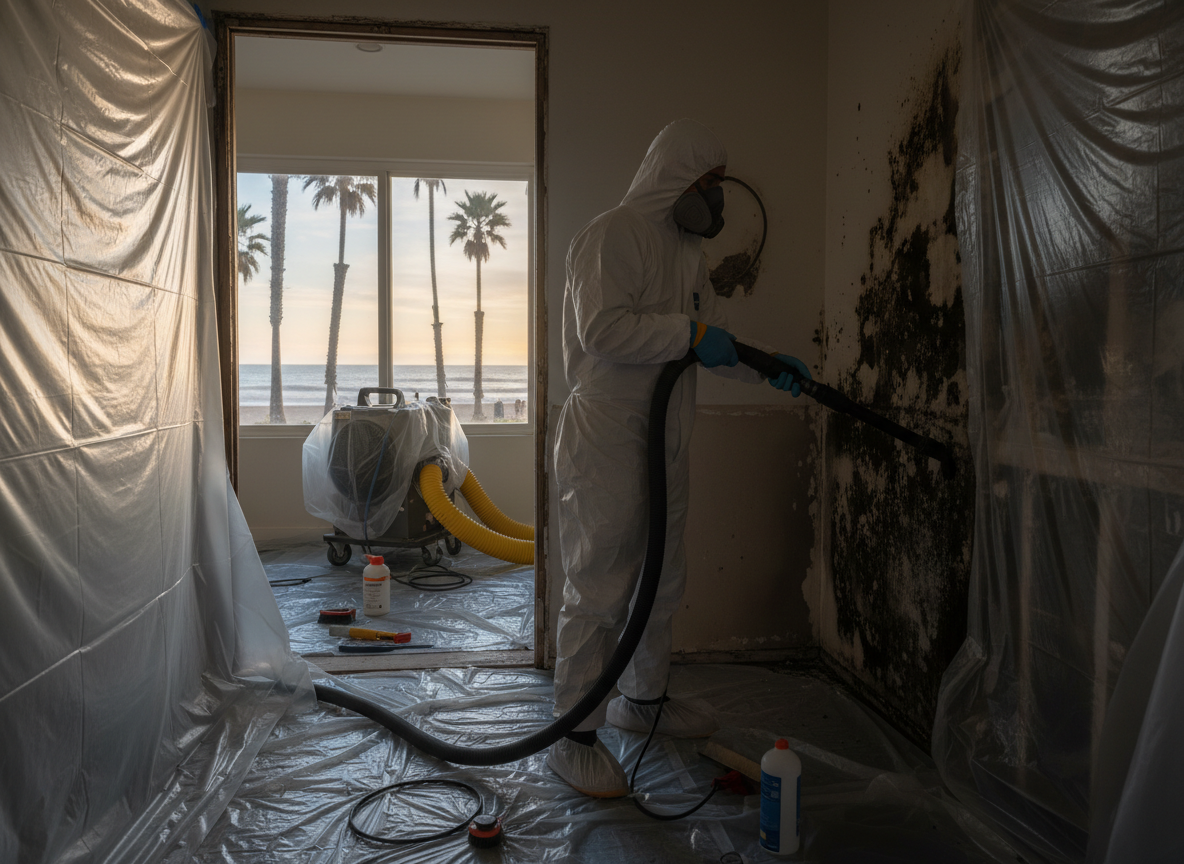
Sunset Beach homes built decades ago along Pacific Coast Highway often feature older wood framing and crawl spaces that trap moisture from the cool ocean air even in summer. Mold abatement here starts with identifying hidden growth behind drywall or under flooring caused by salt-laden fog and occasional storm runoff rather than heavy rain. Technicians must account for the tight lot lines typical in this beach community which limit equipment placement and require precise negative air containment to avoid affecting neighboring properties in Seal Beach.
The mild coastal climate keeps temperatures moderate but maintains steady humidity levels that allow mold to recur if drying is incomplete. Abatement crews use moisture meters calibrated for the sandy soil conditions common near the waterline and focus on ventilation upgrades that work with the area's prevailing on-shore breezes. Work in Huntington Beach adjacent homes frequently involves coordinating with tide schedules when accessing beach-adjacent foundations.
Local building practices from the mid-century era mean many structures lack modern vapor barriers, so abatement includes installing targeted moisture barriers after removal. Crews document every step for Orange County health department records when visible growth exceeds small patches, ensuring the job meets regional expectations without unnecessary over-treatment.
Edge cases include mold in boat storage sheds or garage conversions common in Sunset Beach, where poor original ventilation combines with stored items holding residual moisture. Abatement here requires careful item assessment and often temporary relocation plans to keep disruption low for residents living blocks from the sand.
Technician insight
In Sunset Beach the thing that catches most people out with mold abatement is how the constant cool ocean air keeps crawl spaces and wall cavities damp even when the house feels dry upstairs; older homes without modern underfloor vents let salt air linger and homeowners often miss it until the smell reaches living areas.
Crawl Space Growth After Fog Event
A Sunset Beach homeowner noticed musty odor in the hallway of a 1960s beach cottage. Inspection revealed hidden mold on joists from repeated coastal fog infiltration through unsealed vents. Crews contained the space, removed affected wood sections, dried the sandy soil area, and installed moisture barriers. Odor cleared and humidity stayed controlled through the next cool summer season.
How it works
- 1
Initial Assessment
Technician inspects Sunset Beach property for visible and hidden mold using moisture detection tools suited to coastal wood construction.
- 2
Containment Setup
Plastic barriers and negative air machines isolate the affected area to prevent spores from spreading to unaffected rooms or neighboring homes.
- 3
Removal and Cleaning
Infected materials are removed and surfaces treated with EPA-registered solutions while HEPA vacuums capture remaining particles.
- 4
Drying and Verification
Industrial dehumidifiers and air movers dry the space; post-remediation testing confirms moisture and spore levels meet clearance standards.
- 5
Prevention Recommendations
Homeowner receives guidance on ventilation adjustments that work with the local on-shore wind patterns and typical older-home construction.
Pricing
Upfront quotes provided after inspection; final cost depends on extent of hidden growth and access challenges common in older beach homes.