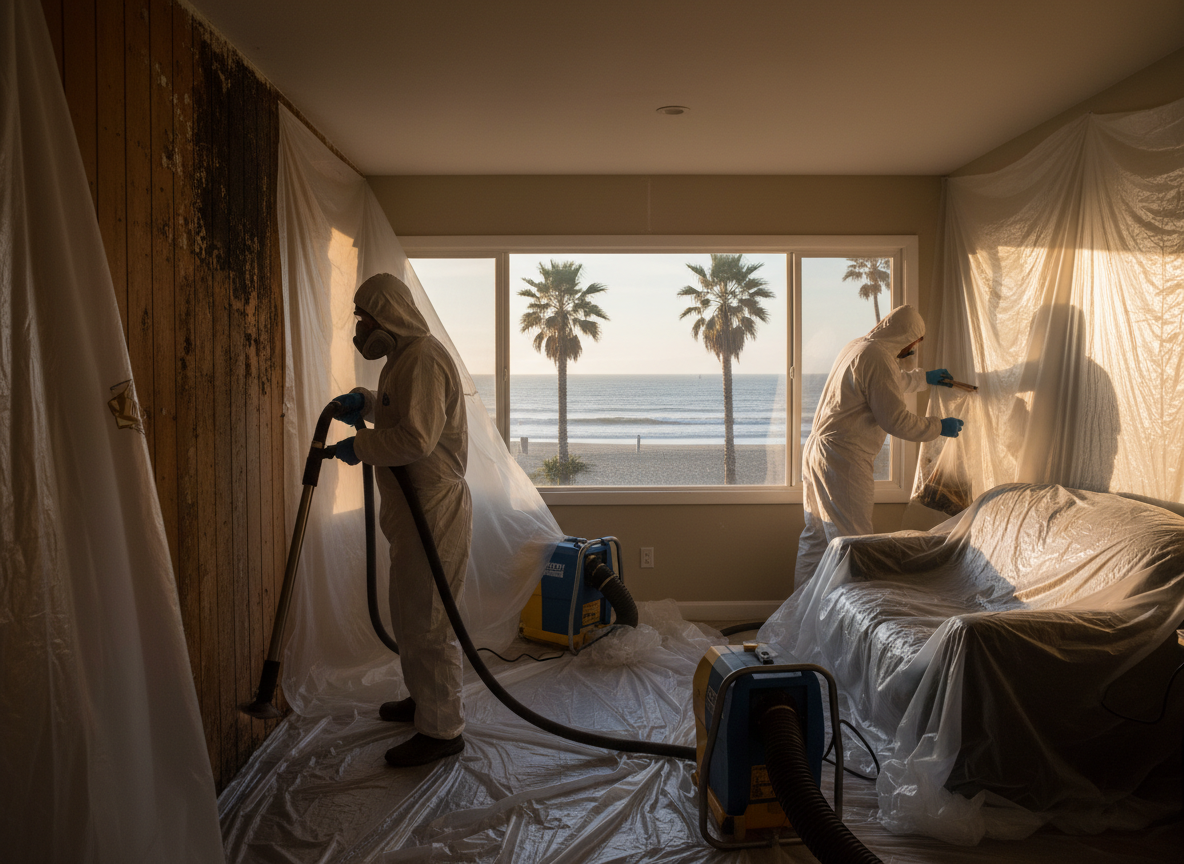
Sunset Beach sits in a mild coastal Mediterranean climate with cool summers that keeps indoor humidity elevated year-round. Older beach cottages and mid-century homes along Pacific Coast Highway trap moisture in crawl spaces and behind stucco, especially when fog rolls in from the ocean. Salt air corrodes metal HVAC components faster than inland Orange County locations, allowing mold to colonize ductwork and wall cavities without obvious water stains on the surface.
Remediation here often requires removing sections of plaster or drywall in tight beach-lot footprints where access is limited. Containment must account for prevailing on-shore breezes that can push spores toward neighboring properties in Seal Beach and Huntington Beach. Technicians use negative air machines with HEPA filtration and seal off HVAC returns to prevent cross-contamination during removal of affected insulation and wood framing.
After physical removal, antimicrobial rinses are applied only to non-porous surfaces; porous materials like drywall and carpet pad are discarded. Final clearance testing includes air samples from multiple rooms plus the attic, because the cool summer nights cause condensation on roof sheathing in many Sunset Beach homes built before modern ventilation codes.
Technician insight
In Sunset Beach, the thing that catches most people out with mold remediation company is salt-laden air corroding the metal ducts in homes built before the 1980s. The corrosion creates pinholes that let humid air reach the back side of exterior walls, so growth often starts in the HVAC plenum rather than from a roof leak. Homeowners who only treat visible spots miss this and see recurrence within a season.
Hidden Growth Behind HVAC Return
A 1960s cottage two blocks from the beach showed musty odors after a cool summer. Inspection found elevated moisture in the wall behind the living-room return grille. The duct had corroded from salt air, allowing condensation to soak the insulation. Crew removed the affected drywall and insulation, cleaned and sealed the duct, then dried the cavity. Clearance tests passed and the odor did not return.
How it works
- 1
Initial Assessment
Technician arrives within hours, uses moisture meters and borescopes to map hidden growth in walls and under floors without disturbing the structure.
- 2
Containment Setup
Plastic barriers and negative air machines isolate the work zone so spores do not migrate into living areas or neighboring homes.
- 3
Removal and Cleaning
Affected materials are cut out and bagged; remaining surfaces are HEPA-vacuumed and treated with EPA-registered antimicrobials.
- 4
Drying and Verification
Dehumidifiers and air movers bring moisture levels below 15 percent; independent lab samples confirm clearance before barriers come down.
- 5
Prevention Recommendations
Report includes specific fixes for local conditions such as improved attic ventilation and GFCI-protected exhaust fans in bathrooms facing the ocean.
Pricing
Cost depends on square footage affected, accessibility, and whether HVAC cleaning is required; written quote follows inspection.