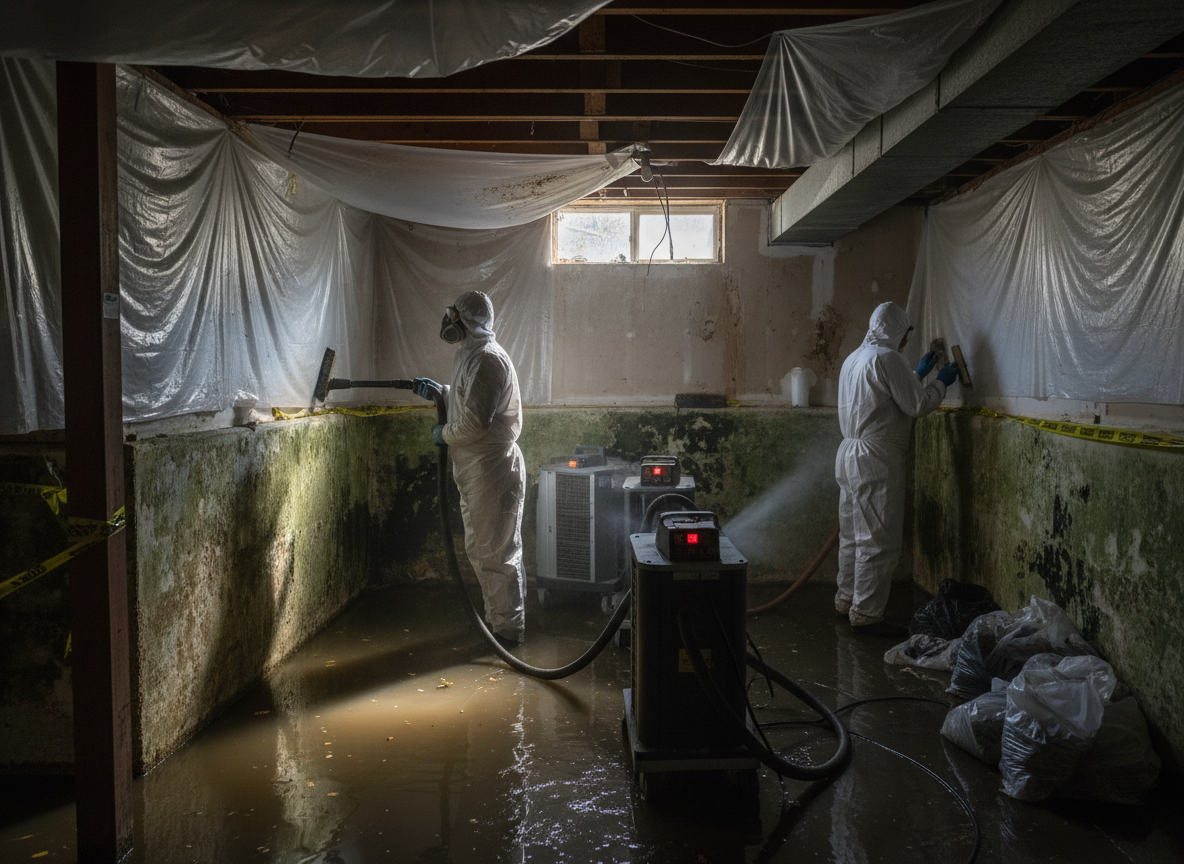
Sunset Beach sits in a mild coastal Mediterranean climate with cool summers and persistent ocean moisture that keeps relative humidity elevated year-round. This environment encourages mold growth in crawl spaces, behind stucco, and under pier-and-beam foundations common in the older beach cottages that line Pacific Coast Highway and the surrounding residential blocks. Salt air accelerates corrosion on metal HVAC components and window frames, creating hidden condensation points that homeowners rarely notice until odors appear.
Many homes here date from the 1940s through 1970s and feature single-pane windows, minimal insulation, and original plumbing that can develop slow leaks under slabs or in wall cavities. When these leaks meet the steady marine layer, mold colonies establish quickly in drywall and subflooring. Remediation crews must account for tight lot lines that limit equipment access and for the need to protect neighboring properties from airborne spores during removal.
Local building practices in Orange County often include raised foundations with limited ventilation, so moisture from even minor roof or pipe issues lingers. Technicians routinely discover growth extending into adjacent rooms after residents report musty smells following winter rains. Proper containment, HEPA filtration, and targeted removal of affected materials prevent cross-contamination in these compact coastal lots.
Technician insight
In Sunset Beach, the thing that catches most people out with mold remediation near me is how the constant marine humidity and older raised-floor homes let small plumbing drips turn into widespread growth under the subfloor before any visible signs appear inside the living space.
Crawl-Space Mold After Roof Leak
A homeowner in Sunset Beach noticed a musty odor after winter rains. Inspection revealed water had entered through a compromised roof edge and wicked across the crawl-space soil, supporting mold on joists and insulation. Containment was erected from the exterior access, affected materials were removed, and the space was dried before reinstalling new insulation.
How it works
- 1
Initial Assessment
Technician inspects all accessible areas including crawl spaces and attics using moisture meters and visual checks for discoloration or odors.
- 2
Containment Setup
Plastic barriers and negative air machines isolate the affected zone to prevent spores from migrating to unaffected rooms.
- 3
Removal and Cleaning
Damaged materials are removed, surfaces are treated with EPA-registered antimicrobials, and HEPA vacuuming follows.
- 4
Drying and Verification
Industrial dehumidifiers and air movers dry the structure, followed by post-remediation moisture and air-quality checks.
Pricing
Upfront quotes provided after inspection; final cost depends on square footage affected, material types, and access constraints.