Sunset Beach sits right on the Pacific with a mild Mediterranean climate that keeps summers cool but maintains steady coastal moisture. Older wooden cottages and canal-adjacent homes built decades ago often trap humidity in crawl spaces, attics, and behind stucco. Salt air accelerates corrosion on metal lath and HVAC ducts, creating hidden moisture pockets that feed toxic mold colonies. Standard drywall in these structures absorbs water quickly during foggy periods or minor leaks, allowing black mold to spread into insulation and framing before residents notice musty odors.
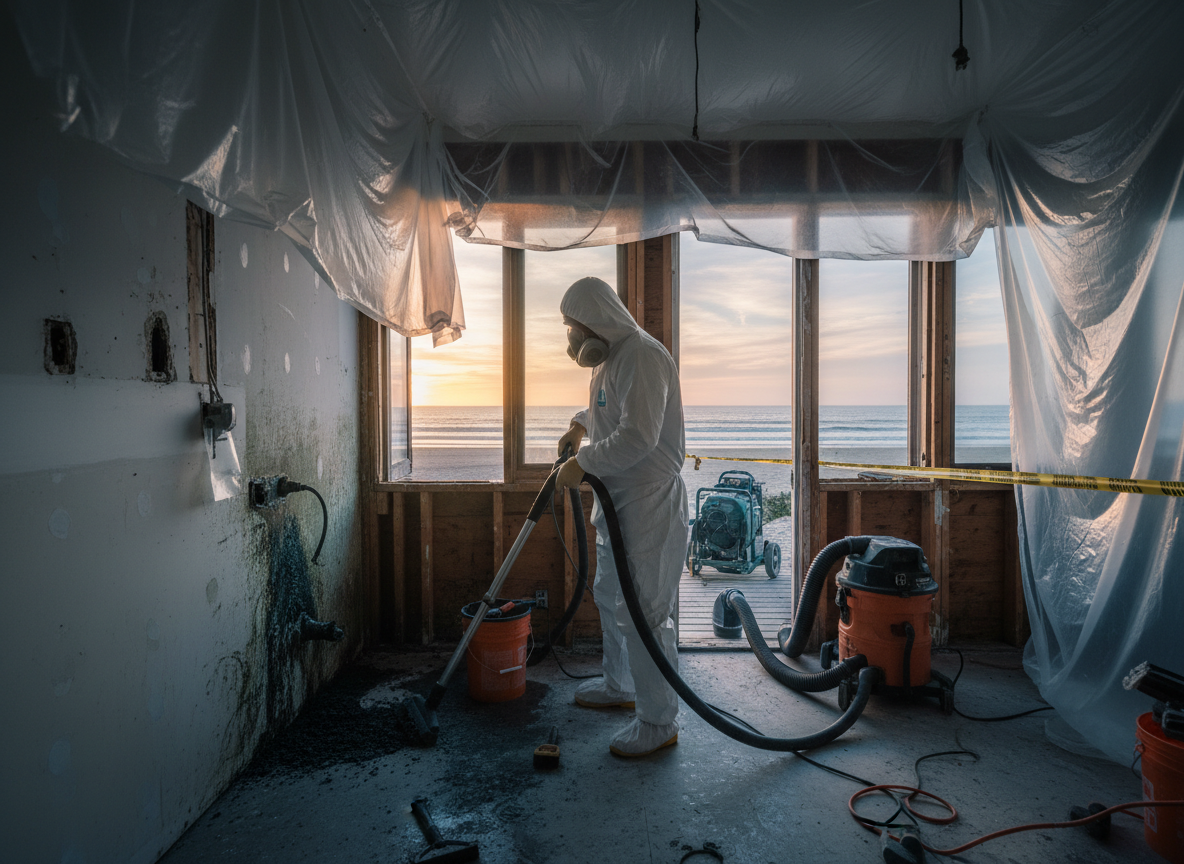
Removal work here requires strict containment because the flat terrain and narrow lots limit airflow around homes. We isolate rooms with plastic sheeting and negative air machines to prevent spores from drifting into adjacent living spaces or neighboring properties. Edge cases include mold growing on redwood siding or inside boat-storage sheds where salt and moisture combine. Homeowners sometimes attempt bleach cleaning, which fails to kill roots in porous materials and can drive spores deeper into wall cavities.
After physical removal we apply EPA-registered antimicrobials to studs and subfloors, then run dehumidifiers to drop indoor humidity below 50 percent. Verification air sampling follows to confirm spore counts match outdoor levels before drywall replacement. Because many Sunset Beach homes lack modern vapor barriers, we often recommend adding ventilation fans in bathrooms and laundry areas to reduce future risk.
Work near the 16812 Pacific Coast Hwy address frequently involves properties built on fill dirt that retains water longer than native sand. This changes drying times and requires longer equipment runtime compared with inland Orange County jobs.
Technician insight
In Sunset Beach the thing that catches most people out with toxic mold removal is how ocean fog and salt air keep older canal homes damp longer than expected, letting mold hide inside floor joists and under kitchen cabinets where standard inspections miss it.
Mold Behind Bathroom Walls After Foggy Season
A Sunset Beach homeowner noticed a persistent odor in the hallway after several weeks of cool marine air. Inspection revealed toxic mold growth on the back side of drywall in two bathrooms where exhaust fans vented into the attic. We contained the rooms, removed the affected drywall and insulation, treated the studs, and added proper attic ventilation. Clearance testing passed and the odor did not return.
How it works
- 1
Initial Assessment
Inspect all suspect areas including crawl spaces and attics using moisture meters and borescopes to map contamination extent.
- 2
Containment Setup
Seal affected zones with plastic barriers and run negative air machines to protect the rest of the home and nearby properties.
- 3
Removal and Cleaning
Cut out and dispose of contaminated drywall, insulation, and trim then treat remaining surfaces with antimicrobial solutions.
- 4
Drying and Verification
Run commercial dehumidifiers until materials reach safe moisture levels then perform air sampling to confirm clearance.
Pricing
Pricing varies with square footage affected, hidden damage behind walls, and drying time needed in humid coastal homes.