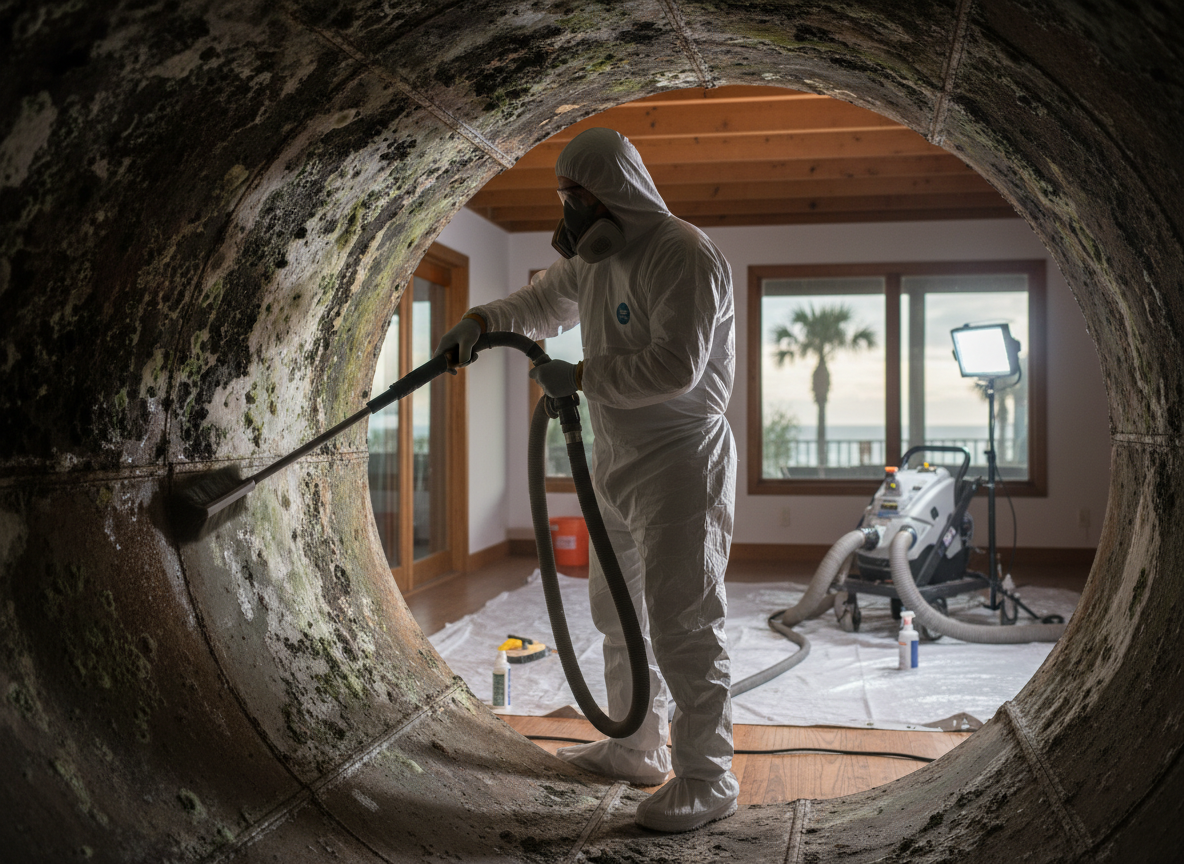
Ventilation mold remediation in Sunset Beach addresses mold colonies that form inside HVAC ducts, registers, and attic returns where ocean moisture meets older beachside construction. Many homes here date to the mid-twentieth century with original metal ductwork that corrodes faster under constant salt air exposure. Technicians must isolate the system, use negative air machines to prevent spore spread into living spaces, and remove contaminated insulation or flex duct sections that cannot be cleaned. The cool summer temperatures typical of this stretch of Orange County keep relative humidity elevated even when outdoor air feels comfortable, allowing mold to persist in low-airflow zones behind walls or in crawl spaces.
Access challenges appear frequently in Sunset Beach because many properties sit on narrow lots with limited roof or attic entry points. Crews often work through small soffit openings or exterior wall penetrations to reach trunk lines running parallel to Pacific Coast Highway. Proper containment includes sealing off bedrooms and using HEPA filtration rated for the square footage of the home rather than generic shop vacuums. After physical removal, antimicrobial treatments are applied only to non-porous surfaces while source control focuses on improving dryer venting and bathroom exhaust routing that commonly tie into the same plenum.
Post-remediation verification requires air sampling from multiple supply and return points plus surface swabs on duct interiors. Homeowners in the area are advised to schedule this work before the winter rainy season begins, when increased indoor time raises the chance of noticing musty odors. Coordination with local HVAC contractors is routine because damaged dampers or unbalanced airflow discovered during mold work must be corrected to prevent recurrence in the mild but persistently damp coastal environment.
Technician insight
In Sunset Beach, the thing that catches most people out with ventilation mold remediation is how the salt-laden air from the nearby ocean accelerates corrosion on original metal ducts in homes built before the 1970s, turning what looks like a simple cleaning job into full section replacements once we open the trunk lines.
Sunset Beach Attic Return Line
A homeowner near the pier noticed recurring musty smells from bedroom vents. Inspection revealed mold on fiberglass insulation inside the main return trunk running through the unconditioned attic. We isolated the system, removed the saturated insulation, cleaned the metal surfaces, and rerouted a bathroom exhaust that had been feeding moisture back into the same line. Follow-up sampling confirmed clearance.
How it works
- 1
System Assessment
Inspect all accessible ducts, returns, and supply runs using cameras and moisture meters while mapping airflow paths typical of Sunset Beach homes.
- 2
Containment Setup
Isolate the ventilation system with plastic sheeting and negative air machines to protect living areas from spore migration during cleaning.
- 3
Removal and Cleaning
Extract contaminated insulation, clean rigid duct surfaces with HEPA vacuums and approved agents, and replace sections that cannot be restored.
- 4
Verification and Prevention
Perform post-clean air and surface testing, then advise on exhaust routing improvements suited to the local climate.
Pricing
Pricing varies by system size, extent of contamination, and number of access points required in older coastal homes.