2026-10-17 ·
Common Attic Mold Issues After Winter Storms Near the Ocean
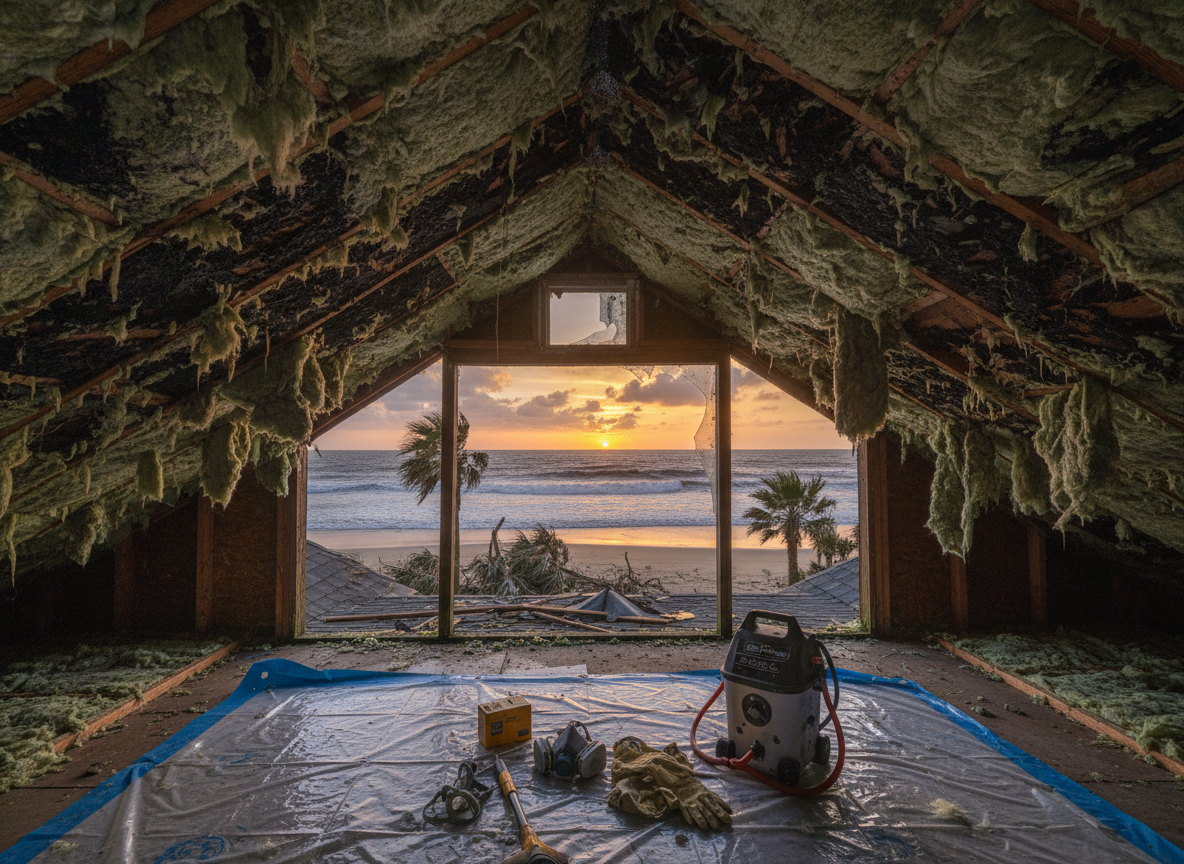
Attic mold commonly develops 2–4 weeks after winter storms hit Sunset Beach because roof penetrations allow rainwater to soak insulation and sheathing in homes built close to Pacific Coast Hwy. The mild coastal Mediterranean climate keeps temperatures moderate but delivers concentrated downpours that overwhelm older flashing and vents.
Roof Leaks Triggered by Winter Rain in Orange County
Homes along Sunset Beach and in Seal Beach often feature 30–50-year-old composition roofs that develop seam failures during sustained winter rains. Water travels along rafters and pools in low spots, raising moisture content in fiberglass batts above 20 percent and creating ideal conditions for mold colonies to form on the underside of plywood sheathing. Salt-laden air accelerates corrosion of metal flashings around chimneys and skylights, shortening their effective lifespan by several years compared with inland properties. Residents in Huntington Beach report similar patterns where wind-driven rain forces water under ridge vents that were never designed for coastal gusts.
Humidity and Salt Air Effects on Attic Ventilation
Even after storms pass, the cool summers and persistent marine layer in Orange County keep relative humidity elevated inside poorly vented attics for months. Salt particles carried inland from the ocean settle on insulation and act as a moisture reservoir, allowing mold to reactivate during any subsequent rain event. Standard ridge-and-soffit systems sized for drier inland climates frequently fall short here, leaving stagnant air pockets above bathroom exhaust ducts that route moisture directly into the attic space.
Visible and Hidden Signs Homeowners Notice First
Discolored drywall ceilings below attic access points usually appear first, followed by musty odors that intensify after sunset when temperatures drop. Homeowners who open attic hatches often find white or black growth on the north-facing rafters where condensation lingers longest. In more advanced cases, insulation collapses under its own weight once cellulose or fiberglass has absorbed repeated cycles of moisture. Checking these indicators early prevents spores from migrating through HVAC returns into living areas.
Practical Next Steps After Discovering Attic Mold
Start by documenting water stains and taking photos for insurance purposes, then schedule attic mold testing and removal with a team familiar with coastal construction. Addressing the roof leak source before any cleaning begins stops the cycle from repeating. For smaller intrusions, review handling minor water intrusion before it turns into mold to understand temporary containment measures that limit spread until professional drying equipment arrives.
Long-Term Prevention in Sunset Beach Homes
Upgrading to corrosion-resistant stainless-steel flashings and adding powered attic ventilators sized for the square footage of the home reduces moisture retention during the next storm season. Annual inspections each fall before winter rains arrive catch sealant failures while they remain small. Properties in Bolsa Chica and Surfside that added ridge-vent extensions report fewer callbacks for recurring growth. Tracking these maintenance items also clarifies variables that affect mold remediation pricing in Sunset Beach when larger jobs become necessary.